

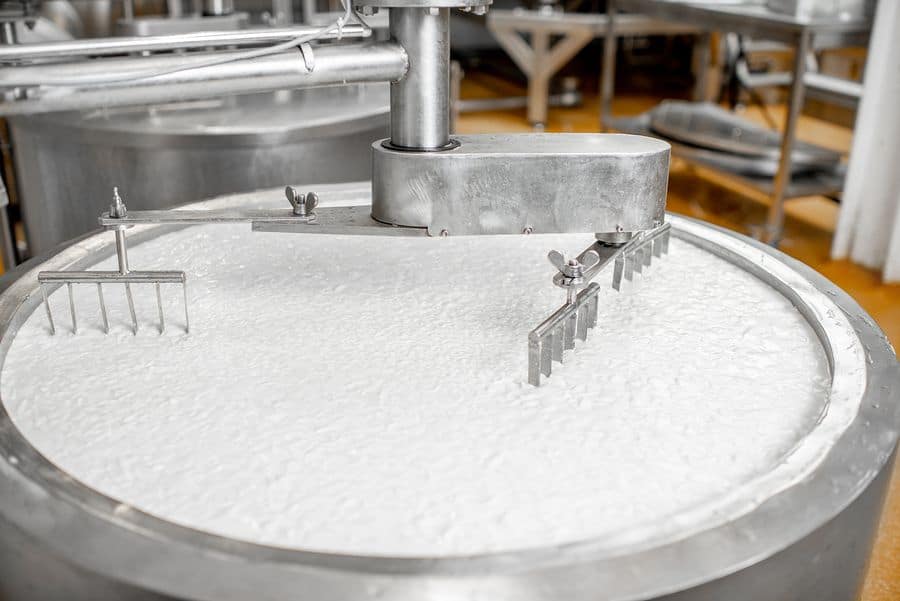
Cheese production involves multiple stages, from milk processing and curd formation to pressing, ripening, cutting and packaging. Each stage requires specialised equipment that must operate reliably, hygienically and efficiently.
Purchasing new machinery is not always the most practical option. For established dairy companies, growing cheese producers and businesses expanding an existing line, used equipment can offer a cost-effective alternative. However, buying a used machine requires careful technical and operational evaluation.
Determine the required production stage
Before searching for equipment, it is important to define where the machine will be used within the production process. Cheese machinery can generally be divided into three main categories:
- Cheese production equipment
- Cheese ripening and handling equipment
- Cheese cutting and packaging equipment
Production machinery may include cheese vats, separators, pasteurisers, pre-presses, final presses and mould-handling systems. Ripening equipment can include racks, washing installations, coating machines and automated handling systems. Packaging equipment may be used for cutting, grating, weighing, wrapping, vacuum packing or labelling cheese.
Clearly defining the application prevents businesses from comparing machines that are not suitable for the intended production stage.
Check capacity and product compatibility
A machine must match the required production capacity. Equipment that is too small can create bottlenecks, while machinery with excessive capacity may consume unnecessary space, energy and capital.
When comparing machines, consider:
- Hourly or daily production capacity
- Cheese type, size and shape
- Required product dimensions
- Batch or continuous processing
- Available floor space
- Required utilities
- Compatibility with existing conveyors and production lines
A cheese cutter designed for round wheels may not be suitable for rectangular Euroblocks. Similarly, a packaging machine must support the required film, portion size and packaging method.
Specialist suppliers of used cheese machinery often divide their available equipment by production, ripening and packaging applications, making it easier to identify machines for a particular process.
Inspect the technical condition
The age of a machine alone does not determine its value. Maintenance history, operating hours, previous use and overall condition can be more important than the year of manufacture.
Important points to inspect include:
- Stainless steel surfaces and welds
- Bearings, motors and gearboxes
- Hydraulic and pneumatic components
- Electrical cabinets and controls
- Safety guards and emergency stops
- Conveyor belts and product-contact parts
- Signs of corrosion, leakage or excessive wear
- Availability of manuals and technical drawings
When possible, the machine should be inspected while operating or tested before shipment. A video inspection may provide useful initial information, but it does not fully replace a technical assessment.
SC Consultancy states that it inspects the used machines it offers before listing them. The company supplies equipment for cheese production, maturation and packaging, as well as complete cheese lines and other dairy machinery.
Consider hygiene and cleanability
Hygiene is essential in all dairy processing environments. Used machinery must be suitable for effective cleaning and should not contain inaccessible areas where product residue can accumulate.
Check whether:
- Product-contact surfaces are made from suitable materials
- Components can be removed for cleaning
- The machine supports clean-in-place procedures
- Belts, seals and hoses can be replaced
- The design meets the hygiene requirements of the facility
- Previous product residues can be fully removed
Older machines may require modifications before they comply with the purchaser’s internal hygiene standards.
Review controls and spare-part availability
Mechanical equipment may remain usable for decades, but outdated controls can become a problem. Older PLCs, sensors, touchscreens or frequency drives may no longer be supported.
Before purchasing, determine whether replacement parts remain available and whether the control system can be integrated into the existing production environment. In some cases, retrofitting a modern control cabinet can significantly extend the working life of a used machine.
Calculate the total investment
The purchase price is only one part of the total cost. Additional expenses may include:
- Dismantling
- Transport and insurance
- Installation
- Electrical or mechanical modifications
- Cleaning and refurbishment
- New belts, seals or bearings
- Control-system upgrades
- Commissioning and testing
- Operator training
A lower-priced machine is not automatically the most economical option if extensive modifications are required.
Work with an experienced machinery specialist
An experienced machinery supplier can help assess whether a machine matches the required product, capacity and production layout. Companies such as SC Consultancy work with individual cheese machines, complete production lines and other equipment used throughout the dairy sector.
For buyers, the most important approach is to define the technical requirements first and evaluate the complete cost of installation and operation. When selected carefully, used cheese machinery can provide a reliable way to expand production capacity, replace outdated equipment or automate an additional processing step.
 English